
We often think of history as a series of dusty dates, but the history of Bahrain is a living story of water, pearls, and trade. Located in the heart of the Arabian Gulf, this archipelago has served as a bridge between East and West for over 5,000 years. Whether you are a student researching the Dilmun civilisation or a tourist planning your first visit in 2026, understanding this past is vital. Our guide breaks down the essential eras that shaped the Kingdom into the modern hub it is today.
The Dawn of Time: Dilmun Civilisation and the Bronze Age
The history of Bahrain begins with the Dilmun civilisation, a powerful maritime society that flourished around 3000 BCE. Ancient Sumerian texts describe Dilmun as a “pure land” and a “paradise” where death and sickness did not exist. This was not just a myth. Bahrain sat on a massive aquifer of sweet water that bubbled up through the sea, allowing a lush environment to thrive in a desert region.
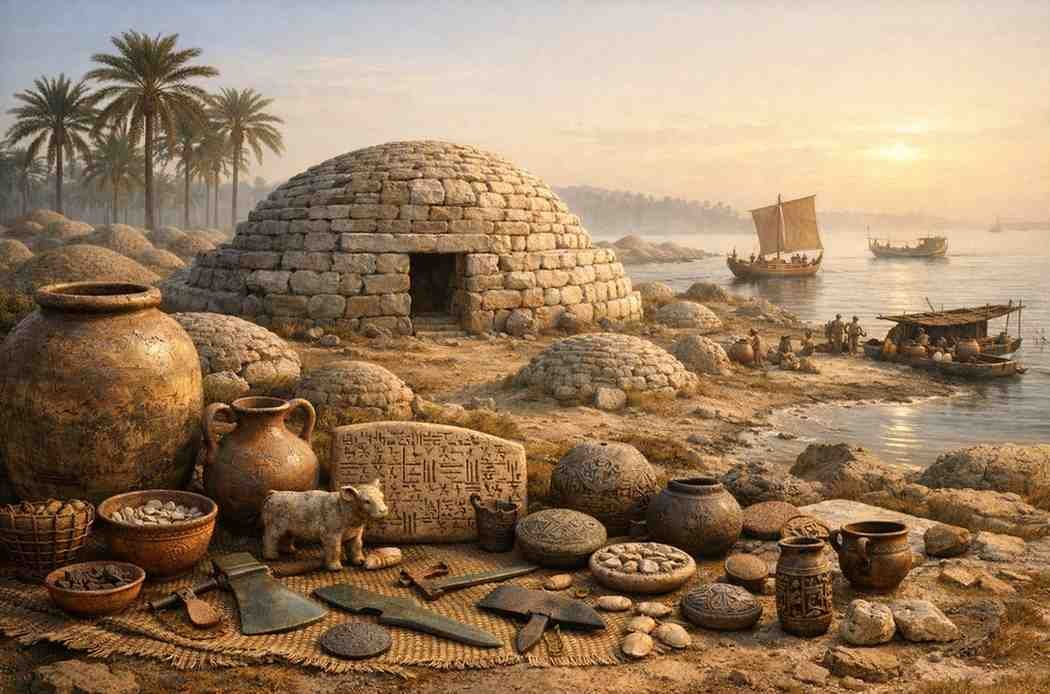
As a central trading post, Dilmun linked the Indus Valley in modern-day Pakistan with Mesopotamia in Iraq. We see evidence of this wealth in the Dilmun Burial Mounds, a UNESCO World Heritage site featuring thousands of tumuli. These mounds prove that the society was highly organised and socially stratified. If you visit the northern parts of the island today, you can still see these ancient “cities of the dead” stretching across the horizon.
- Dilmun Era (3000–600 BCE): The golden age of trade and the legendary Garden of Eden.
- Tylos Period (323 BCE–200 CE): The era of Greek influence following Alexander the Great.
- Awal Period: The pre-Islamic era, where an ox deity was worshipped.
From Tylos to Islam: A Crossroads of Faith
After the decline of Dilmun, the Greeks arrived. Nearchus, an admiral under Alexander the Great, named the islands Tylos. During this time, the history of Bahrain became synonymous with luxury. The islands became the world centre for pearl trading, and the Greeks even introduced cotton cultivation here. We find traces of Greek architecture and pottery in sites like Qal’at al-Bahrain, showing how deeply Hellenistic culture penetrated the region.
By the 7th century, a massive shift occurred. Bahrain was one of the first regions outside of Medina to embrace Islam. The Prophet Muhammad sent an envoy to the ruler of Bahrain, Munzir bin Sawa Al Tamimi, who converted alongside his people. The Al Khamis Mosque, with its iconic twin minarets, stands as one of the oldest Islamic structures in the region. This transition turned the islands into a centre for religious learning and maritime commerce under various Islamic caliphates.
The Pearl of the Gulf: Medieval Trade and Colonial Struggles
For centuries, the Bahrain history timeline was defined by its most famous export: natural pearls. These were not just ornaments; they were the backbone of the economy. Because of this wealth, the islands faced frequent invasions. The Portuguese arrived in 1521, building the massive Bahrain Fort to control the trade routes. Their stay lasted about 80 years before they were ousted by Persian forces.
Life in this era was tough but prosperous for those on the coast. Small villages grew around the pearl industry. If you want to understand this period, we recommend checking out our Bahrain tourism guide to see where the old merchant houses still stand. These buildings, like the Siyadi House, showcase the intricate “craft” of the past without the modern “aesthetic” fluff you see in tourist brochures.
The Rise of the Al Khalifa Family and British Protection
The modern history of Bahrain truly took shape in 1783. The Al Khalifa family, part of the Bani Utbah tribe, arrived from the mainland and established their rule. This move secured the islands’ Arab identity and created a stable political structure that exists to this day. To protect their sovereignty from regional powers, the Al Khalifa rulers signed a series of treaties with the British in the 19th century.
Bahrain became a British protectorate, a status that lasted until 1971. This relationship influenced everything from the legal system to the education structure. While the British managed foreign affairs, the local rulers focused on internal development. This period saw the start of the “Great Transformation,” as the traditional pearling economy began to face competition from Japanese cultured pearls.
The Oil Revolution and Modern Independence
In 1932, everything changed. Bahrain became the first place on the Arabian side of the Gulf to discover oil. This discovery at Jebel Dukhan saved the country from the collapse of the pearl market. We saw a rapid shift from wooden dhows to steel refineries. The wealth from oil allowed the government to build the first schools, hospitals, and paved roads in the region.
Independence arrived on August 15, 1971. Bahrain did not join the United Arab Emirates, choosing instead to become a fully sovereign state. Under the leadership of Shaikh Isa bin Salman Al Khalifa, and later King Hamad bin Isa Al Khalifa, the nation diversified. We now see Bahrain as a global financial centre, a leader in aluminium production, and a major tourism destination.
Cultural Heritage and Modern Society in 2026
Today, Bahrain’s heritage is about more than just old forts. It is a mix of traditional values and a cosmopolitan lifestyle. We see this in the Manama Souq, where you can buy gold and spices just steps away from high-rise banking towers. The nation has also become a leader in sports, hosting the first Formula 1 race in the Middle East.
For students and tourists, the appeal lies in this layers-of-time experience. You can walk through a 4,000-year-old temple in Barbar in the morning and dine at a Michelin-star restaurant in Adliya in the evening. The government continues to invest in “heritage” sites to ensure that the story of the Dilmun civilisation remains accessible to future generations.
Key Milestones in the Bahrain History Timeline
To make this easier for your notes, here is the essential Bahrain history timeline:
- 2300 BCE: Qal’at al-Bahrain becomes the capital of Dilmun.
- 1521: Portuguese forces occupy the islands and build the Bahrain Fort.
- 1783: The Al Khalifa family establishes the current ruling dynasty.
- 1932: Discovery of the first oil well in the Middle East.
- 1971: Bahrain declares full independence from the United Kingdom.
- 2002: Bahrain officially becomes a Kingdom under a constitutional monarchy.
Why Bahrain’s History Matters for Tourism and Trade
We don’t just study the history of Bahrain for fun. It explains why the country is so open and diverse today. Unlike some of its neighbours, Bahrain has always been a “melting pot.” This history of trade created a culture that is welcoming to foreigners and innovative in business. For tourists, this means a safer and more authentic experience. For investors, it means a stable environment with deep roots in global commerce.
According to the Bahrain Authority for Culture and Antiquities, preserving these sites is a national priority. They aren’t just ruins; they are assets that drive the “lead traffic” of the future. When you visit the Tree of Life or the Pearling Path, you are stepping into a story that is still being written.
Frequently Asked Questions
What is the Dilmun civilisation?
The Dilmun civilisation was an ancient Bronze Age society based in Bahrain. It served as a vital trade hub between Mesopotamia and the Indus Valley. It is famous for its massive burial mounds and its reputation as a “paradise” in ancient texts.
Why is Bahrain called the “Land of Two Seas”?
The name “Bahrain” literally means “two seas” in Arabic. This refers to the unique phenomenon of sweet water springs bubbling up from the floor of the salty Persian Gulf. This fresh water made life possible in the desert for thousands of years.
When did Bahrain become an independent country?
Bahrain gained its full independence from the United Kingdom on August 15, 1971. Before this, it was a British protectorate for over a century.
What are the best historical sites for tourists to visit?
We suggest starting with the Bahrain National Museum to get an overview. Then, visit the Qal’at al-Bahrain (Bahrain Fort), the Dilmun Burial Mounds, and the Al Khamis Mosque. These sites cover the major eras of the history of Bahrain.
Conclusion
The history of Bahrain proves that a small island can have a massive impact on the world. From the ancient trade of the Dilmun civilisation to the modern banking of 2026, the nation has always adapted. We see a clear pattern of resilience and openness. For students, this history offers a masterclass in cultural survival. For tourists, it offers a rich, multi-layered journey. As the Kingdom moves forward, its Bahrain heritage remains its greatest strength.
